Ask anyone what colour they are painting their kitchen cabinets and they will answer in a heartbeat. Ask about the finish and the conversation usually stalls. Yet the finish governs almost everything you notice day to day: how the doors feel under your hand, how quickly a splash of tomato sauce wipes away, and whether brush marks catch the light above the hob. Matt, eggshell and satin all belong in a kitchen. They simply do different jobs.
What sheen really means
Sheen is a measure of how much light a dried paint film bounces back. The higher the sheen, the tighter and harder the surface tends to be, which usually means better resistance to moisture, grease and repeated wiping. The trade-off is that shiny surfaces show every ripple, dent and brush stroke on the door beneath them.
Lower sheen does the opposite. It flatters imperfect timber, softens the look of MDF and old cottage doors, and gives that soft, chalky appearance people fall for in magazines. But it is less forgiving of fingerprints and heavy scrubbing.
One important distinction: kitchen cabinet matt is not the same as the matt emulsion you would use on a hallway wall. Wall paint is designed to be decorative and breathable. Cabinet paint is formulated to take knocks, moisture and washing. Always check the tin says it is suitable for woodwork, trim or cabinetry.
Matt: quiet, modern, less forgiving
Matt sits at the low end of the sheen scale, often below five per cent. It reads as velvety rather than flat, and in a kitchen it looks particularly good on Shaker doors, flat-front handleless units and tall pantry cupboards where you want the cabinets to recede rather than shine.
The catch is maintenance. Around handles, drawer pulls and anything within reach of the hob, matt finishes pick up finger marks and fine grease films more readily than their glossier cousins. Wiping too hard with a cream cleaner can polish a patch shiny, leaving a permanent bright spot on the door. Warm water, a drop of washing-up liquid and a soft microfibre cloth are as aggressive as you should get.
Where matt earns its place:
- Upper cabinets and wall units, which are touched less often
- Beaded or panelled doors with plenty of texture to distract the eye
- Bedroom-style colours and deep greens or blues where you want depth without reflection
- Kitchens in households with older children who are past the sticky-hands stage
Eggshell: the sensible middle ground
Eggshell is named for its resemblance to the shell of an egg: a soft, low glow rather than a shine. It generally sits somewhere between ten and thirty per cent sheen, depending on the brand, and it is the finish most decorators reach for on kitchen cabinetry unless the customer asks otherwise.
The reason is balance. Eggshell resists moisture well, wipes down cleanly with soapy water, and hides a reasonable amount of imperfection in the surface underneath. It also looks warmer than satin, which matters in north-facing kitchens or rooms with cool white lighting.
Read the label carefully, though. Some brands sell a decorative eggshell for interior walls and a separate, tougher eggshell for wood and metal. The second is the one you want. If in doubt, ask at the counter whether it is suitable for kitchen doors and skirting.
Satin: the hard-wearing choice
Satin carries a soft shine, roughly a quarter to a little under half sheen. It is the most durable of the three in most ranges, takes repeated wiping without dulling, and stands up well to steam, splashes and the odd accidental knock from a saucepan lid.
It also bounces light around, which can make a narrow galley kitchen feel brighter and pick out the moulding on panelled doors. The drawbacks are honesty and appearance. Satin shows dents, filled chips and uneven sanding far more clearly than matt, and in very strong colours it can tip towards a plasticky look if you apply it too thickly.
A word on whites. Traditional oil-based satin paints have a reputation for yellowing over time, particularly in rooms that get little natural light. Water-based satin and modern alkyd hybrids are far less prone to this, so if you are painting cabinets white, water-based is usually the safer bet.
Sheen at a glance
- Matt — very low sheen; soft and contemporary; best on upper units and low-traffic doors; needs gentle cleaning
- Eggshell — low sheen with a warm glow; good all-rounder for family kitchens; wipes clean with soapy water
- Satin — soft shine; the toughest and most washable; ideal for lower cabinets, bin cupboards and dishwasher surrounds
Matching the finish to the room
You do not have to choose one finish for the whole kitchen. In fact, mixing them is often the most practical answer.
- Heavy-use family kitchen. Satin on base units, drawers and anything within a metre of the hob or bin. Eggshell or matt on wall cupboards.
- Tidy couple, statement colour. Matt throughout, in a water-based cabinet paint, and accept that the doors will want a wipe each week.
- Small or dark kitchen. Eggshell or satin in a light shade to lift the space and reflect what daylight there is.
- Rental or quick flip. Satin or a hard-wearing eggshell. It tolerates cleaning from tenants and hides less than you might think.
Prep and aftercare matter more than the sheen
No finish survives poor preparation. Kitchen cabinets carry a thin film of cooking grease that you cannot always see, and paint will not stick to it.
Wash every surface with sugar soap, rinse with clean water, and let it dry fully. Sand lightly to give a key, then dust off. On melamine, vinyl-wrapped or previously varnished doors, use an adhesion primer made for glossy surfaces — it is the difference between a finish that lasts years and one that peels in a season.
Apply two thin coats rather than one thick one. A foam roller gives a fine, even texture on flat panels; a small brush handles mouldings and edges. Lay off in one direction while the paint is still wet. Water-based cabinet paints feel dry within hours but continue to harden for several days, so treat the doors gently for the first week and avoid scrubbing them.
For everyday care, warm water with a little mild soap and a microfibre cloth is all you need. Skip abrasive creams, bleach sprays and scouring pads, which dull the finish and can leave visible patches.
Choosing with confidence
If you want the safest answer for a busy kitchen, eggshell on the uppers and satin on the base units will rarely disappoint. If the look matters most and you are happy to wipe surfaces regularly, matt gives the most elegant, furniture-like result. Satin is the pragmatic pick for cupboards that take a beating.
Whichever you choose, buy a paint formulated for cabinetry rather than walls, do the preparation properly, and test a door first. A single painted door in your own kitchen light tells you more than any swatch ever will.
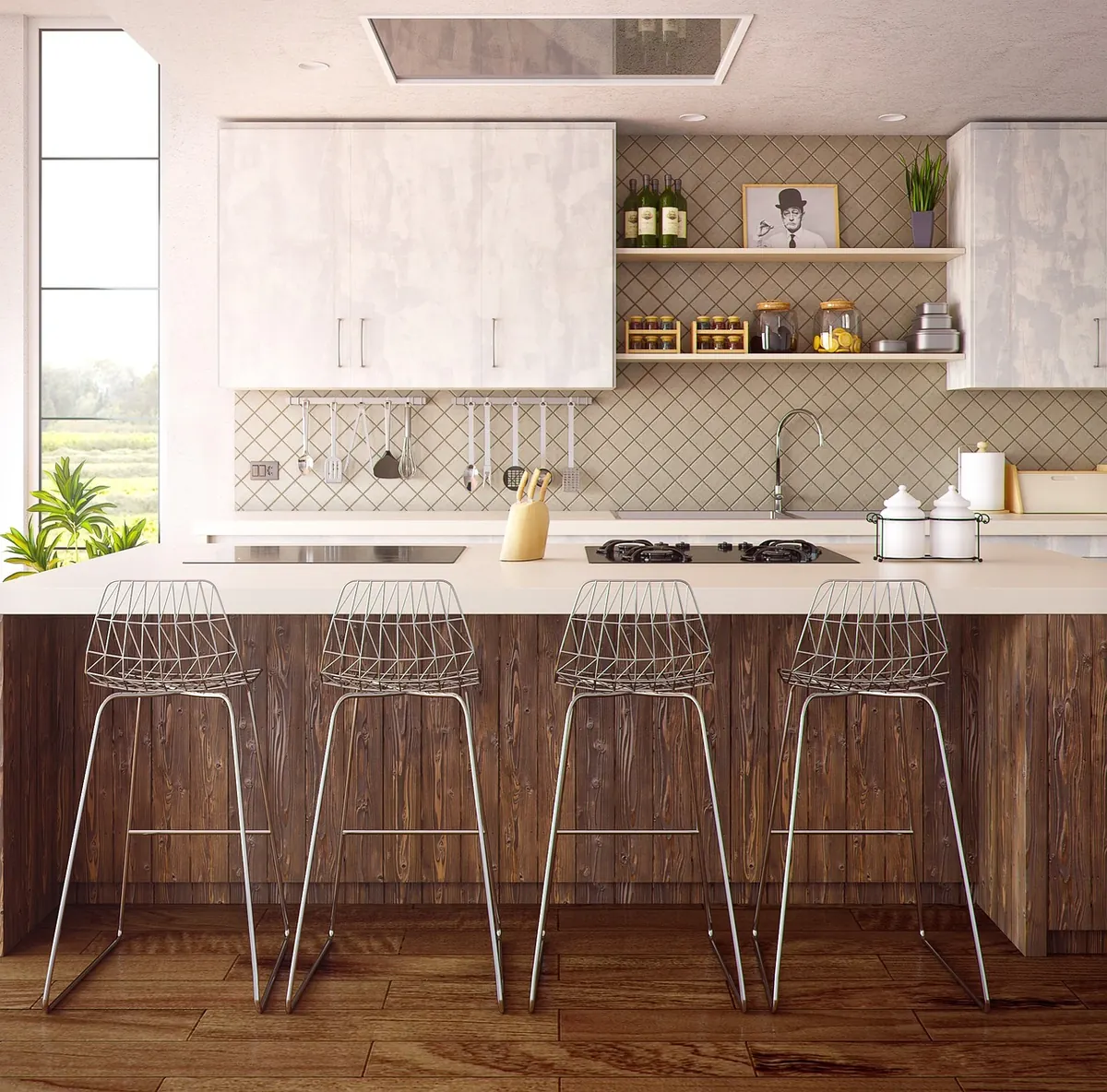
Photo: Giovanni_cg / Pixabay