A houseplant that fades slowly is rarely a mystery. It is usually telling you that one of a few basic needs has gone wrong — water, light or air — and the signs appear long before the plant is beyond saving. Most of the fixes take minutes, not money. Here are the mistakes that claim the most indoor plants, and the practical answer to each one.
1. Overwatering: the classic houseplant killer
Overwatering is not about how much water you pour in one go. It is about compost that stays wet for days. Roots need oxygen as well as moisture, and in permanently saturated compost they suffocate and start to rot. The cruel part is that a rotting plant wilts and droops in a way that looks exactly like thirst, so owners reach for the watering can and make it worse.
Watch for these signs:
- Lower leaves turning yellow and soft rather than dry and crisp
- Stems that feel mushy where they meet the compost
- Compost still damp a week or more after watering
- Tiny black flies hovering around the pot — fungus gnats breed in wet compost
- A sour, stagnant smell coming from the pot
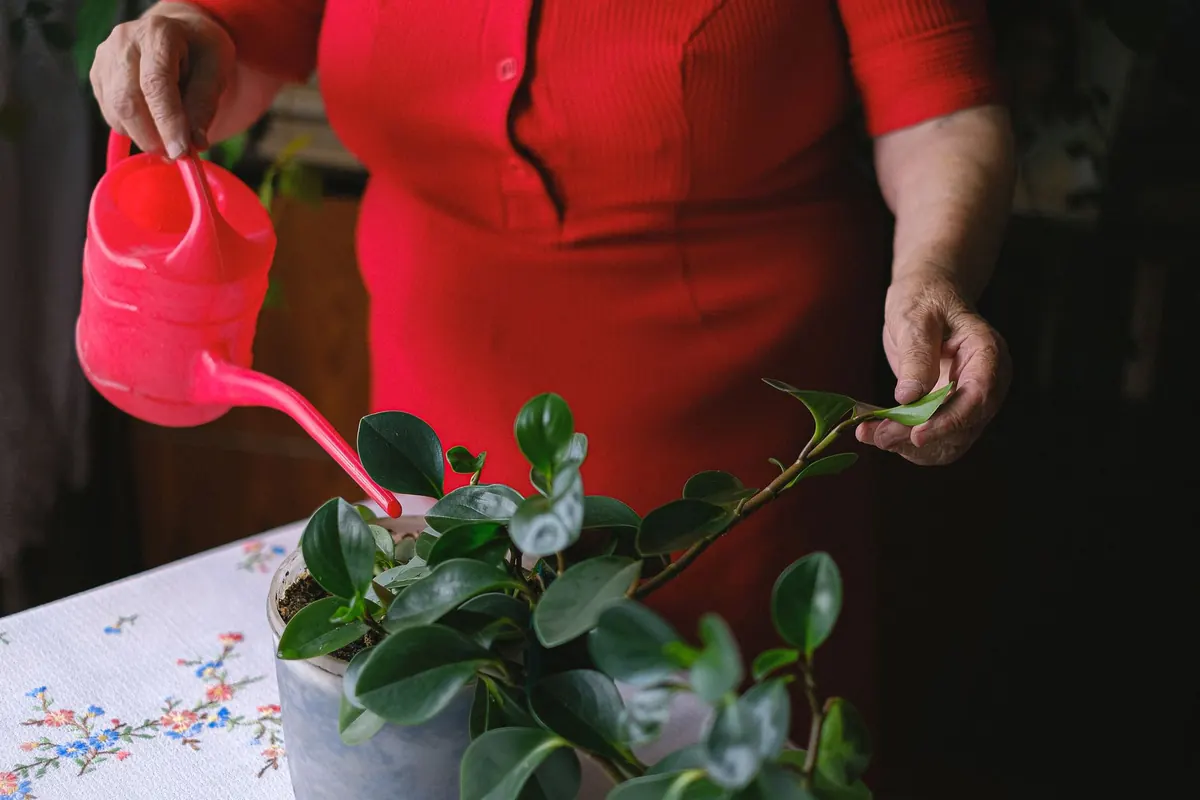
The fix: water thoroughly until it runs out of the drainage holes, then stop and tip away anything left in the saucer within twenty minutes. Do not water again until the top two to three centimetres of compost feel dry.
2. Watering on a schedule instead of checking
"Every Sunday" feels tidy, but a plant in a warm south-facing room in July can need water twice as often as the same plant in a cool north-facing room in December. Light, temperature, pot size and the season all change how quickly compost dries, so check rather than assume.
Three reliable tests:
- Push a finger two to three centimetres into the compost. Damp at the tip means wait.
- Lift the pot. A well-watered pot feels noticeably heavier than a dry one, and once you know your plant's weight you can judge it instantly.
- Slide a wooden skewer down to the base and pull it out. If it comes away clean, the compost is drier than it looks on top.
Broadly, succulents, cacti and most snake plants want to dry out almost completely between waterings. Ferns, calatheas and peace lilies prefer compost that stays lightly moist. If you are unsure, erring on the dry side is far safer for most houseplants.
3. Getting the light wrong in both directions
"Indirect light" on a plant label does not mean a dark corner. In the UK, a north-facing window gives soft but genuinely low light, an east window delivers gentle morning sun, and a south or west window can be fierce in summer, especially between midday and late afternoon. A plant 30 to 60 centimetres back from the glass gets noticeably less light than one on the sill, which is often all the adjustment needed.
Signs a plant wants more light
- Long, weak gaps between leaves and stems leaning towards the window
- New leaves smaller and paler than the old ones
- Variegated leaves gradually reverting to plain green
- Barely any new growth for months, even in spring and summer
Signs it is getting too much
Crisp brown patches, bleached spots and leaves curling away from the glass usually mean direct sun has scorched the foliage. Move the plant back a little or filter the light with a sheer blind. Also give the glass itself a clean — grimy windows cut out more light than most people realise.
4. Ignoring humidity and draughts
Most popular houseplants come from humid forest floors, and a centrally heated British home in January is nothing like that. Misting helps for a few minutes at best. Better options are grouping plants closely so they share the moisture they release, standing pots on a tray of pebbles with water below the pot, or running a humidifier in the room.
Just as important is where the plant sits. Radiators, hot air from vents and draughty doorways strip moisture and stress leaves. Brown, crispy edges on calatheas, ferns and spider plants are a common signal — though they can also come from hard tap water, which is why rainwater or filtered water suits these plants better. Cacti and succulents, by contrast, are perfectly happy in dry air, so don't force everyone into the same conditions.
5. Choosing the wrong pot and compost
Indoor plants die in decorative pots with no drainage hole more often than almost any other way. Water collects at the bottom with nowhere to go and roots sit in it. Either use a plastic nursery pot inside the decorative one and empty the outer pot after watering, or drill a hole.
Compost matters too. Garden soil compacts in a pot and suffocates roots; use a peat-free houseplant compost, ideally lightened with perlite or bark. Size is the third trap: a plant moved into a pot far bigger than its root ball sits in a large volume of wet compost it cannot drink from. When you repot in spring, go up by only two to three centimetres in diameter.
6. Feeding on autopilot and ignoring pests
Feeding
Two opposite mistakes cause trouble: never feeding at all, and feeding constantly. Feed from spring to early autumn while the plant is actively growing, at half the strength stated on the bottle if you feed weekly. Do not feed a dry plant, a dormant plant or a newly repotted one. If a white crust appears on the compost surface, you have overdone it — flush the pot with plain water and let it drain.
Dust and pests
Dusty leaves block the light a plant needs, so wipe larger leaves with a damp cloth every few weeks. While you are there, look at the undersides. Fine webbing, white fluffy patches, sticky residue or clusters of tiny specks mean pests. Wipe what you can see, treat with an insecticidal soap as the label directs, and repeat weekly for a few weeks. Keep new plants apart from the rest for a fortnight before adding them to the group.
A five-minute weekly routine
Most plant problems are caught early simply by looking. Set aside a few minutes each week and work through this:
- Check leaves on both sides and look at the growing tips.
- Feel the compost two to three centimetres down in every pot.
- Water only the plants that need it, until it runs through, and empty the saucers.
- Rotate each pot a quarter turn so growth stays even, and move anything sitting against a radiator or in a draught.
- Pinch off dead or yellowing leaves and wipe dust from the larger ones.
Do that consistently and you will notice changes within days rather than weeks, which means you can act while a plant is still easy to save. Half the battle with houseplants is simply paying attention a little more often than the plant needs rescuing.
Photo: Anna Shvets / Pexels